
In conversation with… Octopus Community Network
Julie Parish is one of the founders of Octopus Community Network. She tells us how they are supporting community centres, taking action on climate change locally and help people to access nature on their doorsteps in Islington.
What do you do at Octopus Community Network?
We are a network of 14 independently run community centres in Islington. We’ve existed as a network for 25 years and I’ve been involved since the beginning. Our role has always been to enable the community centres not just to survive, which has been difficult over the years, but to thrive, making sure they are able to respond to what local people need.
I absolutely love community centres because they knit communities together. Everyone who lives in the local area has access to their local community centre and Islington’s rich diversity is welcomed and celebrated, so you get different groups coming together through shared interest which is great.
The skills and expertise I have brought to the Network is through my work in small business development. From the outset, I saw a lot of similarities with the needs of community centres, but when I started working with them, I realised that many had never considered business planning and didn’t have much experience with fundraising. Now I use my business development skills to make sure the centres are run well and can go out and compete for funding.
What is the Nature Neighbourhoods project?
This project helps communities in urban areas to create their own plans to improve local nature and take climate action. It’s supported by national organisations including the RSPB, the National Trust and WWF, and has provided funding for 18 different neighbourhoods across the UK.
We were approached by the National Trust to be a partner and we worked with Islington Council to select a neighbourhood in Islington. The council asked us to focus on Tufnell Park because of a few different factors – it is an area of high heat and flood risk and there are a lot of people who don’t have access to outdoor space – so working through the community centres we began to look at how we could identify and create space for nature and people.
How are local people involved?
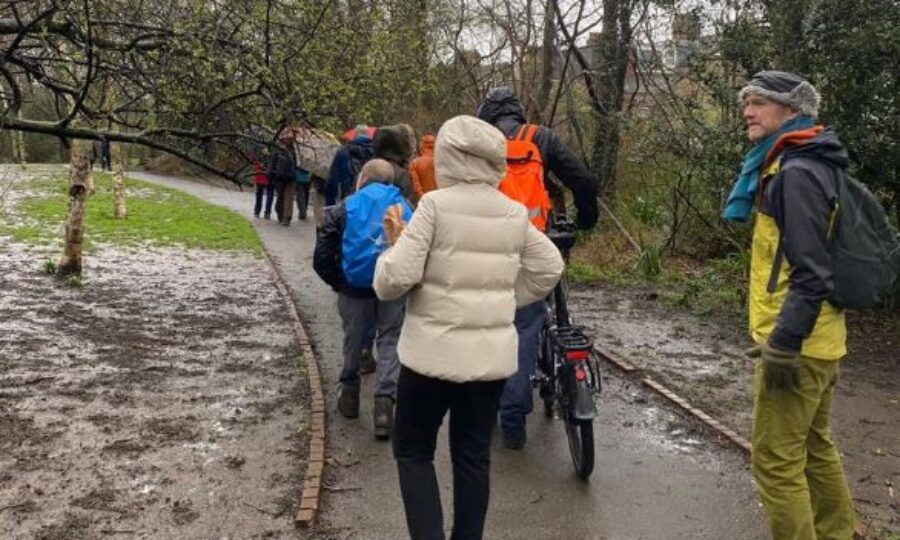
We started by talking to local people through events and inviting them to walk with us through the area. We wanted to know what people saw as being really important for their neighbourhood and the constant message that came across was that nature shouldn’t be a destination; it should be on the doorstep. When you see images of people being out in nature, it’s often somebody up a mountain or in a field or in the woods but that that doesn’t resonate with people who were living in densely populated, built-up Islington.
We’ve been working with residents through three community centres that are in the area, which are developing as ‘nature anchors’ now, because residents were clear that they needed neighbourhood-based support on their doorstep. This helps local people to take an active role in the long-term management and maintenance of public green spaces.
Through the lived experience of local people we’ve also got a neighbourhood plan, which is the starting point for improving how people experience nature in Tufnell Park.
What does that mean for people in Tufnell Park?
Listening and responding to what people wanted to change and opportunities that they saw, we’ve worked with the local community to identify locations for three new orchards, and through skills-building workshops a group of local people have been trained up in planting and maintaining orchards. Plus, we’ve transformed a site that was attracting some anti-social behaviour into a woodland garden, and working alongside residents, a new growing space has been established on the Tufnell Park estate.
Another request from the local community was to find a way of celebrating and recognising the natural spaces that already exist because not everyone knows about them. So we are working with National Trust to help people map those local community gardens and green spaces that already exist as well as new spaces that are ripe for community greening.
We are also developing the Nature Neighbourhoods Volunteer Group, who will form a movement of people sharing their skills and expertise to drive all this work forward. If you are interested, please get in touch with us!
What else is happening at Octopus?
Our food waste upcycling project is an exciting development in our ambition to develop a closed-loop gardening system. We wanted to give people access to good soil improver, because a lot of people don’t realise you need to put nutrients back into the soil every growing season to get the best results. So, we’ve created a Compost Hub on site at the Community Plant Nursery, with another at the Mildmay Community Garden, where residents can bring their food waste and growers get access to nutrient-rich, locally produced compost.
Looking forward, we are keen to run some activities over the next year to boost the number and diversity of pollinating insects. We can achieve that through studies organised by local people to find out what insects are already here and what we need to encourage, and we can make a big difference by planting the right pollinator plants – so look out for a campaign on that which will launch this year.
To hear more from Julie, come along to Islington Council’s public meeting on the climate emergency. There will be updates from the council, as well as guest speakers including Islington Climate Panel, Power Up North London, Islington Fixers and the Felix Project.
10 March 2026, 6pm at Islington Town Hall
Register your attendance: Agenda for Environment, Climate and Transport Scrutiny Committee on Tuesday, 10th March, 2026, 6.00 pm | Democracy in Islington

