
International Women’s Day: Lisa Power MBE and Jaci Quennell
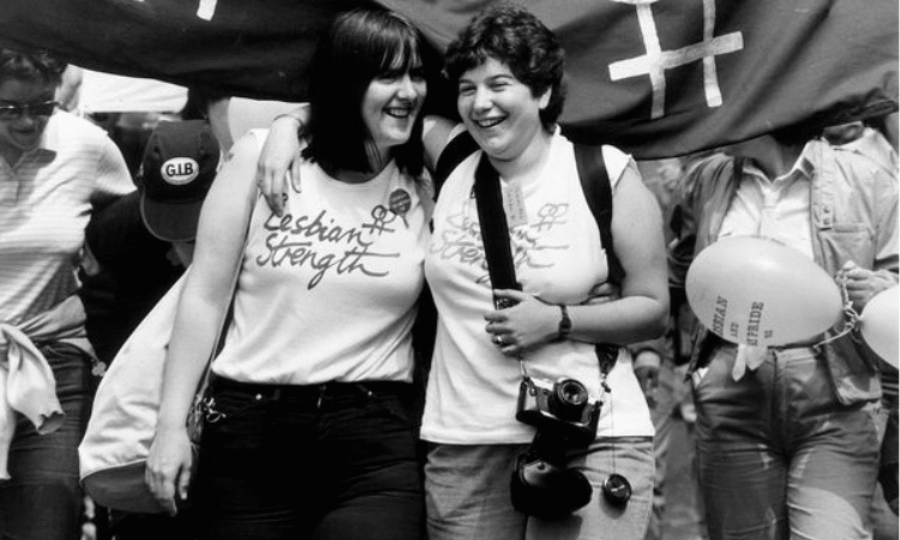
The theme for International Women’s Day 2026 is “Give to Gain.” It celebrates how people and organisations grow stronger when they work to make the world fairer.
To mark the day, we spoke to two women who have given so much to feminist and LGBTQ+ communities, especially here in Islington in the 1980s:
Jaci Quennell, who helped set up the London Lesbian and Gay Centre in Clerkenwell.
Lisa Power MBE, a well‑known lesbian activist who lived in Islington and used the Centre often.
Both women shared warm, funny and emotional memories of community, activism and change.
Jaci Quennell
Finding queer community in the 80s
Jaci sang with the Pink Singers, now the oldest LGBTQ+ choir in Europe. She was also on the committee building the London Lesbian and Gay Centre.
Remembering that time is both happy and painful for her. Many friends she made back then later died during the AIDS crisis. “I couldn’t bear to hear another person was gone,” she said.
Life with the Pink Singers
Jaci knew the choir’s leader, Mark Bunyan, well. She and her partner at the time were the first women to join. Jaci was also the only soprano—she jokes that other women didn’t want to admit they could sing high notes, as it “offended their lesbian credentials.”
She loved the choir because it was fun, political and filled with talented singers.
Building the London Lesbian and Gay Centre
Jaci fought hard to make the Centre accessible for disabled people, including getting the bar lowered so wheelchair users could be served. She has many happy memories from that time, including singing songs from Oklahoma! in the bar with fellow activist Brian Kennedy – you can read our blog on Brian here.
That same year, Jaci moved north to Merseyside, but kept returning to the Centre when she could.
A life of service
Jaci has worked as a social worker for almost 50 years. She has created programmes for the prison service and helped shape HIV services in the North West. She also had to find a new childminder when one refused to look after her baby “in case they caught AIDS.”
“I’m still proud to be queer,” she said. “I might be an old granny but I’m still here!”
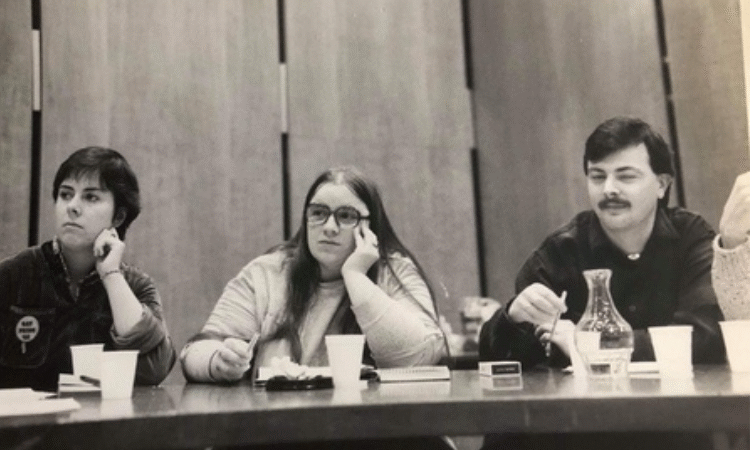
Jaci (left) at a Greater London Council (GLC) Gay Rights Working Party meeting
Lisa Power
Queer life in Islington
Lisa first came to London in the 70s and lived in cheap, temporary “licensed squats” in Islington. She joined Gay Switchboard in 1979 and quickly became a committed activist.
London’s LGBTQ+ scene surprised her at first. Back in Lancaster, everyone—gay, straight, lesbian—went to the same Friday disco. In London the community was split into small, often arguing groups. Lisa didn’t understand why. “Shouldn’t we be working together?” she thought.
Women at the London Lesbian and Gay Centre
Lisa’s girlfriend, Jenny Wilson, chaired the committee that ran the Centre. Lisa remembers it as “lovely but chaotic.” Many women helped run it, and lots of lesbians used the space.
There were also tensions. Some activists believed you had to be “the right sort” of lesbian or gay person to belong. Lisa wrote a magazine column poking fun at this idea. She herself was nearly thrown out of Switchboard for being bisexual, but the women defended her: “You’re a disgrace, Lisa,” they told her, “but we don’t want the men telling us what to do!”
She also laughs about the building’s rumoured “ghost bull” in the basement (the Centre was converted from a meat factory). Gay men spread these rumours so they’d have somewhere private to hook up.
What the centre felt like
Lisa spent most of her time in the busy ground‑floor bar, where groups like ACT UP met. The area wasn’t fancy back then, but for many LGBTQ+ people it was the one place they could be themselves.
Lisa later worked as a historical advisor on the TV series ‘It’s a Sin’, using real Switchboard call logs from the 80s.
She calls herself an “accidental activist.” Being an only child made her confident enough to speak up, even when others didn’t agree with her. “History isn’t a straight line,” she said. “It spirals. Things can get worse again. But you can make things better—just don’t shut up!”
Her advice for young queer people today
“Do something. Do anything. Every action helps. Every time you speak up, come out, or gently correct someone, that’s activism. It all adds up.”
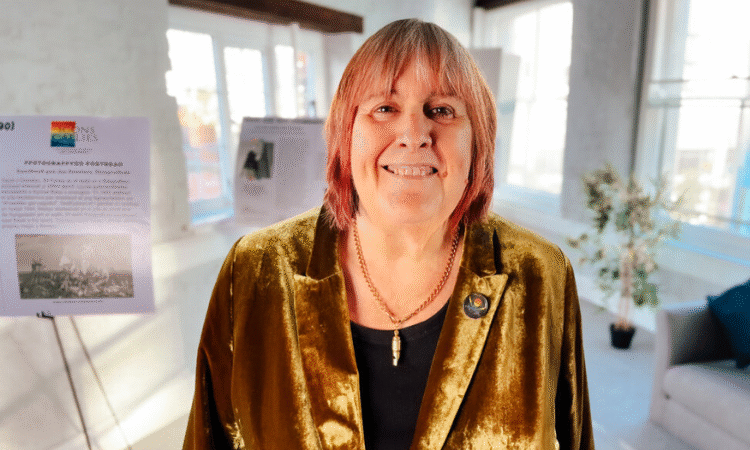
Lisa Power MBE
Latest Discover Islington blog
- International Women’s Day: Lisa Power MBE and Jaci Quennell 6 March 2026
- Taking youth support to the streets 3 March 2026
- IslingtonLife spring 2026 2 March 2026
- Crossing for half a century 2 March 2026
- LGBT History Month: In conversation with the Director of forum+ 27 February 2026
- Where British Sign Language meets community 24 February 2026

