
LGBT History Month: Celebrating Brian Kennedy
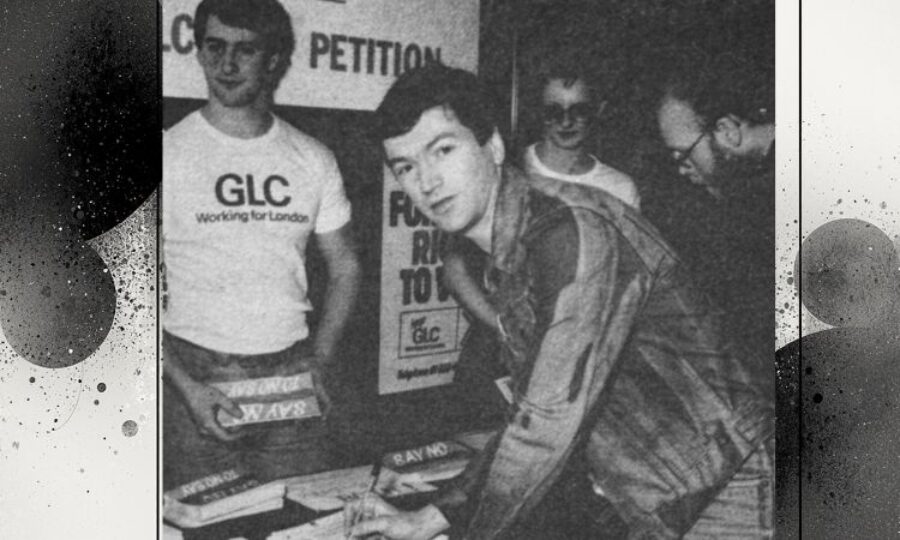
For LGBT History Month, Miles Rhys Edwards, Co-Chair of Islington Council’s LGBTQ+ colleague forum, writes about Brian Kennedy (1953-1990), a pioneering gay activist, writer, biochemist, and queer choir member, who helped establish The London Lesbian and Gay Centre in Islington.
I first heard about Brian Kennedy in June 2024, at the 40th Anniversary performance of the Pink Singers, the oldest LGBTQ+ choir in Europe. My boyfriend is a member of said choir, and during the concert, in which I was moved to tears (I ugly-cried several times), an older member of the choir recounted his memories of its early days.
The choir first gathered in Oval, around a rickety piano played by Mark Bunyan, the gay cabaret star. Mark had been, by his own account, essentially hounded into leading the new choir by Brian, who wouldn’t take no for an answer: ‘There was a point I reached where I said: they’re everywhere! I open a wardrobe door, and Brian Kennedy walks out saying “What about the gay choir for London?” and eventually I said that I would do it.’
They met on April 7 1983, three days after Brian’s 30th birthday. As a warm up, to the tune of the nursery rhyme ‘Frère Jacques’, they sung: ‘Homosexual, homosexual, lesbian, lesbian, we are homosexual, we are homosexual, we’re all gay, we’re all gay.’
I reminded myself of this history by listening to ‘Sing It Pink’, the choir’s excellent podcast, created to commemorate their 40th year. It paints a portrait of Brian, and his unshakeable belief in community. 40 years later, the all-gender choir is bigger, more diverse than ever, and performs to packed audiences. It’s Brian’s legacy and a testament to his capacity to inspire.
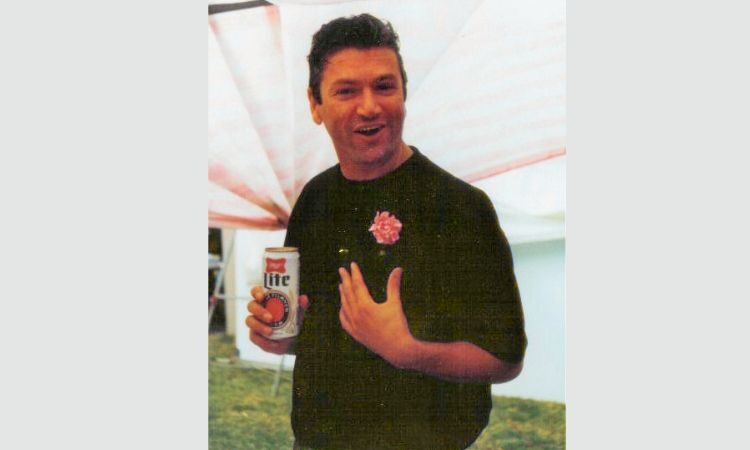
Brian Kennedy attending Pride
Brian’s influence spanned across music, culture, literature, and even science. He held a doctorate in biochemistry and initially worked in cancer research. He drew on this background in 1982 when writing a series of articles for Capital Gay on the illness affecting gay men in San Francisco and New York at the time, commonly termed ‘gay cancer’ – but which we now know as AIDS. He was one of the very first to dedicate sustained attention to HIV, and to demand government action, which would only come belatedly, after Brian himself had died from complications due to AIDS in 1990.
Brian epitomises the theme of UK LGBT History Month 2026: ‘Science and Innovation’. His contributions to LGBT culture were various and vital.
In 1983, he joined City Limits – an alternative listings magazine to Time Out – as the first editor of ‘Out in the City’, its dedicated queer section. Soon after, he was recruited by the Greater London Council (GLC), the precursor to today’s Greater London Authority (GLA), to establish the Lesbian and Gay Centre. The centre opened in 1985 at 67–69 Cowcross Street in Clerkenwell, a location steeped in the area’s historic slaughterhouse district. The building, a disused meat warehouse that Brian identified, was purchased and refurbished using £750,000 of GLC funding. For seven years, it served as a vital hub for the local queer community, hosting key organisations and operating as an important community centre.
Lesbian performer Rose Collis, Brian’s co-editor at City Limits, remembered his work at the Centre in her obituary to him: ‘As first Development Worker for the London Lesbian and Gay Centre, he was a vital and finely balanced link between local government and the commercial and community scenes.’
Later he became an important mediator between the police and the gay community, as police brutality stirred up increasing outrage.
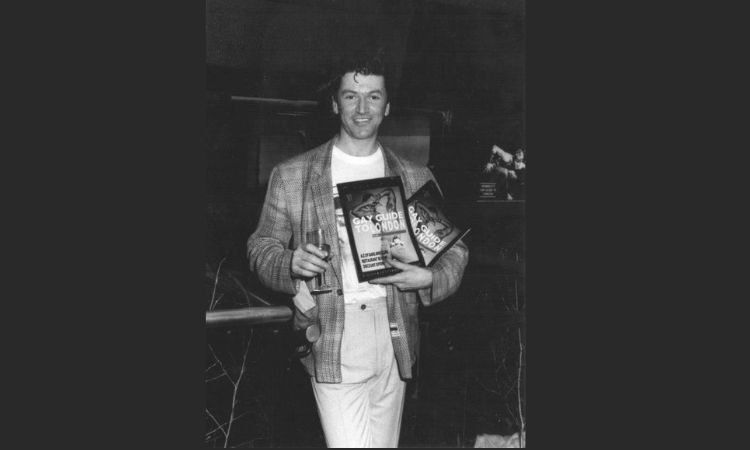
Brian in 1987 holding 'Kennedy’s Gay Guide to London'
Above all, Brian cherished community. In 1987, he published Kennedy’s Gay Guide to London with his partner Robin Moonie. He writes passionately in that publication about queer community and the charities supporting the thousands living with, and dying from, HIV: ‘the work of the unpaid volunteers at Switchboard, London Friend, Terrence Higgins Trust and many others is long-lasting testament to the effectiveness of a sense of community.’ He wrote this in 1989, months before HIV killed him.
His obituary in Capital Gay notes that ‘He died in the care of his lover Robin, whose devotion to Brian had been ceaseless, tender and an inspiration to both men’s many friends.’ Brian cherished community, and so the community cherished him.
What strikes out in others’ memories of him, and in his own writing, is his unapologetic adamance, his pride – ‘his astonishing energy’, as Capital Gay put it. He believed gay people were equal to straight people, absolutely.
He writes, half-jokingly: “My main fault with the gay ghetto/scene/community/lifestyle is that it hasn’t gone far enough yet. […] We don’t have a gay TV station […], a gay sports complex, a gay cinema, a gay department store or a gay taxi service. But we will.’
I think Brian would be thrilled to learn that now we have our own month (well, two, including Pride). I’m a gay person who has enjoyed the privileges of a life in which I can mostly be myself, can get tested regularly for HIV, can love my boyfriend freely and watch him sing his little heart out – and I have Brian to thank for that. Thank you so much Brian, and happy LGBT History Month! You died four years before it was first dreamt up, but I just know you would have loved it.
Listen to the ‘Sing it Pink’ podcast – the touching story of the Pink Singers, London and Europe’s oldest LGBTQ+ choir, told through the people who sang for freedom.
Islington’s Pride was a project undertaken by the Islington Heritage Service. The Islington’s Pride archive is available to view at Islington Archives
With sincere thanks to Islington Pride and Chris Scales, Archivist of the Pink Singers, for generously providing access to Brian’s writings, obituaries, and photos.
Latest Discover Islington blog
- Taking youth support to the streets 3 March 2026
- IslingtonLife spring 2026 2 March 2026
- Crossing for half a century 2 March 2026
- LGBT History Month: In conversation with the Director of forum+ 27 February 2026
- Where British Sign Language meets community 24 February 2026
- In conversation with… Octopus Community Network 23 February 2026

