
LGBT History Month: Terrence Higgins Trust
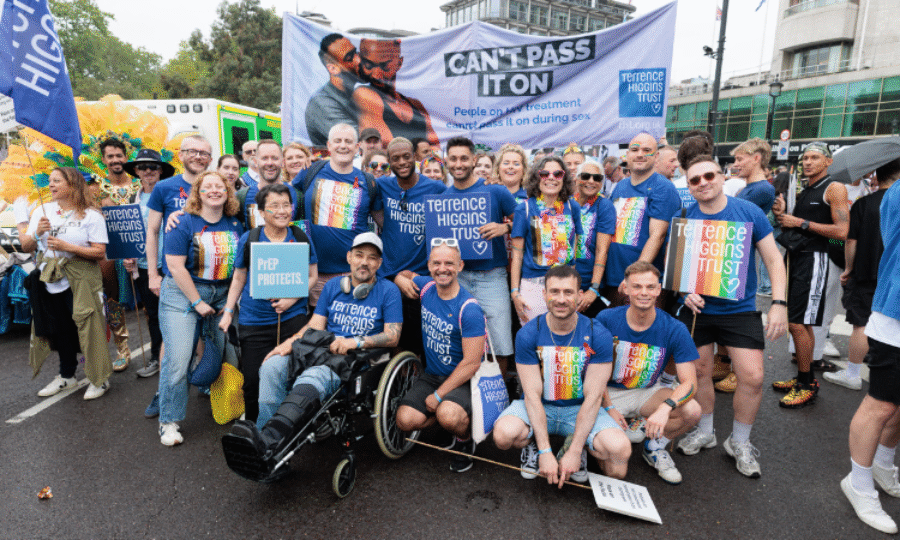
For the second in our series for LGBT History Month, and for HIV Testing Week, Miles interviewed lesbian activist Lisa Power, who worked at THT for 17 years, and Tomas Slater, current Media and Communications Officer at THT, to build a picture of the charity, which has its offices in Islington – its past, present, and future.

Lisa Power, Queer Activist and Ex Policy Director at THT
You took calls about what became HIV/AIDS at Lesbian & Gay Switchboard before the illness even had a name. What do you remember about those early calls and the atmosphere around them?
I remember gay men being terrified or completely oblivious. For years we ended every call saying ‘have you heard about AIDS?’ Long after the first government campaign in 1986, people still weren’t aware.
It was confusing, scary – scariest for gay men, who were dying all around us. We lesbians helped wherever we could, and we felt like a community. The government were not taking it seriously; they didn’t want Switchboard on their committees because we were considered “radical”.
You were with Terrence Higgins Trust from 1996-2014 and became Policy Director. What were the biggest challenges THT faced during that time?
The biggest obstacle was getting enough money to keep existing services going. Everybody wants to fund shiny, new ideas. The fundraising team loved me because I used to come up with ideas they could get shiny new money with!
When I worked the party conferences, I had to handle a lot of stigma. Before it became okay to be gay and Tory, the THT stand was the secret gay pickup point – young gay Tories would hover around it trying to look winsome!
The new treatments introduced massive policy changes. THT were the only big organisation at the time that had any sense of what the future was going to hold. They pivoted hard from a strategy designed to help people die well, to one designed to save people’s lives. I managed the production of informational materials about treatment and had a bad biology O-Level, so my only rule was that I had to understand the pamphlets going out, because then I knew that anyone would!

Terry Higgins AIDS Memorial Quilt
How do you think the landscape of HIV activism and public health has changed from the 1980s to now?
In the 80s we were just trying to get the news out. Health authorities were reluctant to invest in treatments. We were informed in our approach by US ACT UP styles of protesting. So, we essentially had to shout at a lot of people, including boroughs, and demand they get their acts together.
Now, thanks to modern medicine, the situation is more optimistic. But the moment you take your foot off the pedal, HIV will rise again; it’s rising in countries where they pretend it doesn’t exist. We could eradicate the spread of HIV if governments actually paid attention to what people need rather than what they think they ought to behave like.
What lessons from the early HIV movement should younger activists, councils, or community groups keep in mind today?
We need to stir to action the principled people who have enough of a cosy life that they’re scared of upsetting the apple cart. People need to re-learn that “trouble” is a good thing if it’s done for the right reasons, more of us need to be getting into trouble!
People should be inspired by the progress made by HIV activists. I always quote activist Joe Hill: “Don’t mourn, organise!”
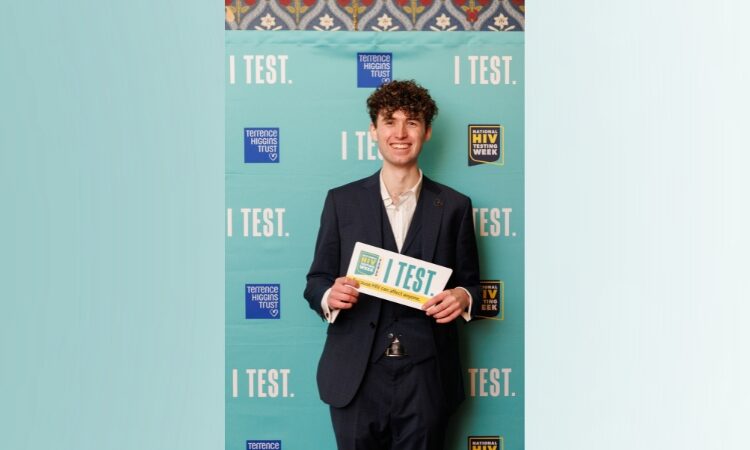
Tomas Slater, Media Officer at THT
What was the early history of THT?
THT was founded in 1982 after the death of Terry Higgins, the first named person to die of an AIDS-related illness in the UK. There was no name yet for the virus, or treatment. We built a support helpline before there was any public campaign. In 1986, the first government-led HIV campaign included the number for THT without asking us. The response was so overwhelming, it blew out the switchboard at Kings Cross!
Princess Diana, Rapid HIV tests THT pioneered taking this into the community,
How has the charity’s mission evolved since the 1980s?
Since the revolution in treatment in the 1990s we’ve been able to change from trying to support people with a seemingly terminal diagnosis to helping them live well with HIV. We tackle the stigma against people living with HIV, help them into employment, and support them with their mental health.
What recent milestones are THT particularly proud of?
In December the government announced the HIV Action Plan, which THT and partners helped to shape. We won £170 million pounds for HIV prevention, the biggest investment in decades, to help us reach no new transmissions by 2030.
What does Terrence Higgins Trust’s presence in Islington look like?
We’ve been based here since 2020 but have a long history operating within the borough and providing services to Islington residents.
Our offices are on Caledonian Road and we offer low-cost or free counselling for people living with HIV and our national HIV helpline still operates here.
How has progress toward ending new HIV transmissions by 2030 influenced your work on the ground in places like Islington?
We need to test more people, and to make sure people living with HIV are supported with continuing care – for people with complex lives this can be challenging. A key bit of funding from the Action Plan concerns supporting people with HIV back into care. London boroughs like Islington pioneered the opt-out testing, approach, which allowed us to identify lots more people who were living with HIV without knowing it, and to support people who had dropped out of care and weren’t receiving medication.
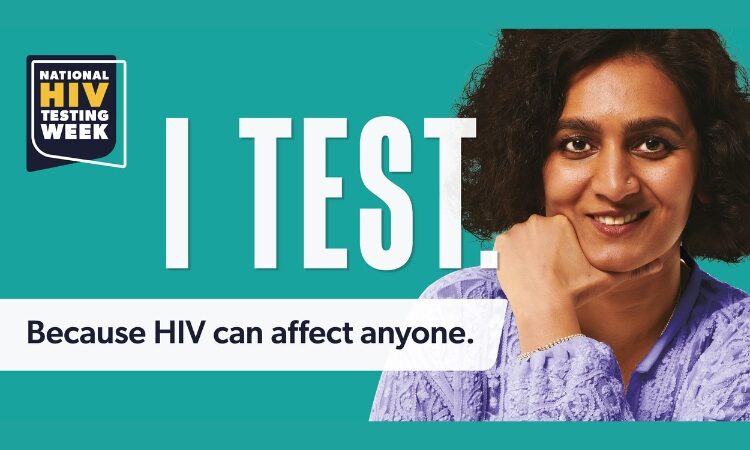
The It Starts With Me I Test Campaign.
What challenges remain when it comes to access to testing, stigma, or inequalities in sexual health?
There’s still an estimated 4500 living with HIV in England who haven’t tested. They might be afraid of the diagnosis, or feel they can’t catch the virus, or they’re accessing care but are slipping through the cracks. People still think it only affects gay men, but – 50% of new diagnoses in 2024 were among heterosexual people.
We’re working with clinicians to make sure they’re testing everybody and breaking down the barriers for people who should be getting tested but aren’t. National HIV Testing Week is vital because it destigmatises testing.
How can Islington residents support THT?
Donations are always immensely important, and people can donate clothes at our Pimlico boutique. One of the most powerful things you can do is pass on the message that someone living with HIV on effective treatment cannot pass on HIV.
What are your hopes for the future of THT?
The main hope is that we’ll still be here to support people living with HIV for as long as we’re needed, and that we get to a place where there’s no more diagnoses.
THT are one of six organisations delivering support to people living with/affected by HIV through the candiNETWORK, a fully co-designed service for Camden and Islington. They work collaboratively with Living Well, Positively UK, Food Chain, Bloomsbury Network and JDT (formally YMCA Positive Health) to provide a holistic support offer through they network referral programme. Residents can access the candiNETWORK through any one of the services mentioned and be referred through the network for any relevant support they might need. This includes life coaching, beyond diagnosis courses (formally newly diagnosed), dietician support, physical health programmes, groups, workshops and socials.
Latest Discover Islington blog
- International Women’s Day: Lisa Power MBE and Jaci Quennell 6 March 2026
- Taking youth support to the streets 3 March 2026
- IslingtonLife spring 2026 2 March 2026
- Crossing for half a century 2 March 2026
- LGBT History Month: In conversation with the Director of forum+ 27 February 2026
- Where British Sign Language meets community 24 February 2026

