
Spring has sprung: Making it Happen for Islington’s pollinators
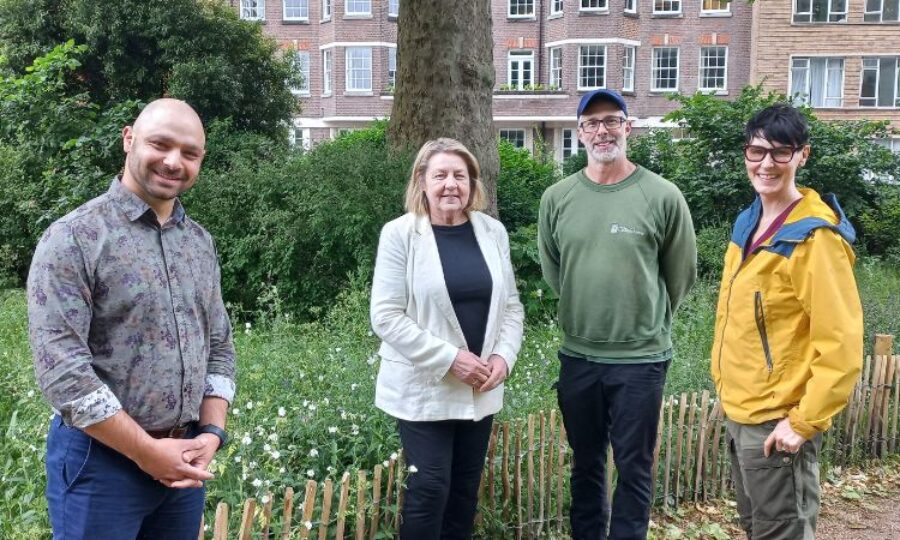
Spring has sprung in Islington, and with it, a flourishing community effort to help our borough’s pollinators thrive. The Clerkenwell Pollinator Project, funded through contributions required from developers building in Islington, is a shining example of residents, experts, local organisations and the council coming together to make it happen
Working in partnership with charity Pollinating London Together (PLT), the Friends of St John’s Garden community group, and the council’s Parks Service, this community-led initiative is helping identify, understand, and support the vital insect species that keep our ecosystem healthy. Through hands-on surveying, workshops, and accessible citizen-science training, the project shows how everyone — from seasoned horticulturalists to neighbours with window boxes — can play a part in boosting biodiversity across one of London’s most densely built-up areas.
We sat down with project lead and Islington resident Sarah Wood and the Charterhouse’s Head of Horticulture, Justin Dennis to discuss how the project spawned and how residents are buzzing with excitement for building a pollinator-friendly future.
What inspired the creation of the Pollinator Project?
SW: I learned about PLT through a chat with Justin who was already working with them, and a talk delivered by Dr Konstantinos Tsiolas, Pollinator Ecologist. The Charterhouse has the horticulture expertise, were already recording pollinators, and were keen collaborate with local communities. This project is about connections; together we can transform Clerkenwell into an urban pollinator paradise.
Why are pollinators so important in an urban environment like Islington?
JD: Every third mouthful of food is derived from a pollinator; without them, the world would starve. Pollinators make the flowers bloom and the world wake up in spring. They’re responsible for your lighter mood on a sunny day. We have little greenspace in Islington so we must protect it.
What specific challenges do pollinators face in cities?
SW: Fragmentation, loss, degradation, habitat and food source destruction. Some bees are tiny, and they need nesting sites near food and water sources. This is very challenging to accomplish in the city.
How have residents contributed to the project so far?
SW: Over 1000! 450 people tuned in to our insight event in December. We brainstormed our next steps, and how to involve more people. We’re working with the City of London Primary Academy to help the children create a pollinator garden in the sky, on their rooftop. We have 15 ‘Friends of’ community groups, LSE and City St George’s involved, and Queen Mary University running 3 intergenerational bee hotel workshops.
What role does citizen science play in shaping local environmental policy?
SW: It’s brilliant to have experts train us, but we need to keep educating and upskilling ourselves as individuals and community groups. Training is simple: you learn to make a quadrat and count the insects in it within ten minutes, and record your findings on the PoMs app, which aggregates pollinator data across the UK.
JD: The Charterhouse have been moth trapping for 2 years, all done by non-experts with a book and uploaded to the national moth database. AI is quite reliable now. Working with other organisations makes things cheap and it’s a lovely, social environment.
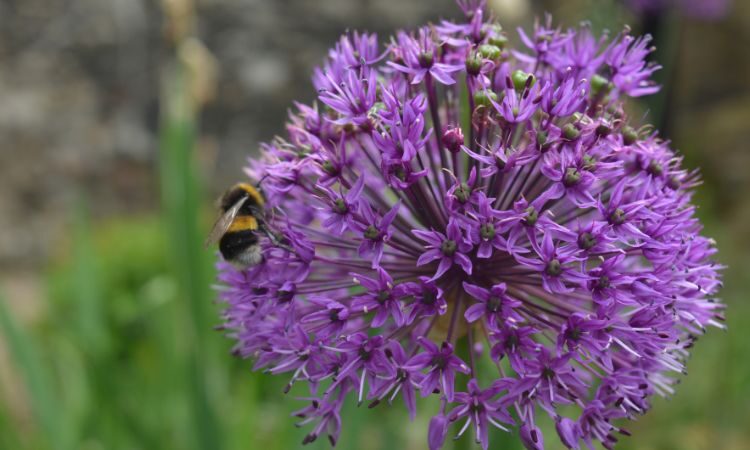
Allium flower and bee
Have you seen any surprising or exciting findings from the photos and surveys submitted by residents?
JS: We’ve seen a hawk moth twice in the Charterhouse Garden! That was astonishing.
What does success look like for this project?
SW: By 2030 we’d like to see a pollinator pit stop every 100 metres across Clerkenwell. Ultimately, we want to halt pollinator decline, green the grey, and nurture our community.
Our priority now is spreading the word! We’ve identified the top ten pollinators we can support in Clerkenwell and designed a Clerkenwell Pollinator Toolkit. We hope to sow the seeds of nature restoration across the neighbourhood!
We’ve got upcoming habitat workshops, bee hotel installations, and spring planting.
How will the toolkit help residents make their spaces more pollinator-friendly?
SW: It’s a visual demonstration of what pollinators need to thrive – bees, butterflies, beetles, wasps. There’ll be flora resources and advice on the habitats required.
For example, the mint moth lays its eggs in the base of mint plants, so you may not want to chop everything back! A structural shrub is important for its verticality and complexity; ideally, you want a “mosaic garden” with a diversity of plants and habitats to accommodate the larval food stages of butterflies and moths. It’s a Rubix cube of food and shelter, and the blueprint will give Clerkenwell residents the confidence to do their bit for bees and butterflies.
What benefits have been observed since the project began?
JS: We’ve been working with PLT for four years and seen an uptick in pollinator numbers. There’s an old Victorian wall which is a lovely habitat for bees, but they didn’t have any food. We’ve planted more suitable plants in that meadow area, and cavity-nesting bees are now flourishing.
We lacked butterflies, so we’re building them a “butterfly border”, a reliable food source.
SW: It’s brought us together in new ways as a community. The WhatsApp group is very active, exchanging photos of insects. It’s provided a shared sense of purpose, belonging, and wellbeing, and given us hope that we can have an impact.
It lifts your soul to see a lavender bush abuzz with bees – it’s beautiful!
Could this model be replicated in other boroughs or cities?
JS: I very much hope so – the key is to have a great bunch of people on your side.
SW: We’re lucky to have passionate people from the council’s Estates and Parks teams working with us, and organisations like the Charterhouse and St John’s.
What advice would you give to individuals who want to support pollinators but have limited space?
Even if you just have a sunny window box, plant some lavender, it will make a difference!
What drew you personally to work on pollinator conservation?
JS: My focus was ornamental gardens; we’re trying to make natural spaces that non-humans can occupy.
SW: I see the magic that can happen when people move away from screens and enjoy the sunshine, get their hands in the soil, enjoy the fresh air and socialise – pollinators bring people together. Pollinator plants look and smell fabulous. There’s great need nationally and locally – we have little green space, which therefore needs to work hard to improve air quality, our mental health, and the health of our communities.
What’s the most rewarding part of seeing this project come to life?
JS: It delights me seeing pollinators transform an inactive piece of land into one buzzing with life!
SW: For me it’s about the connections; I love watching people learn from each other, the children planting their herbs. Lots of children in Farringdon don’t have their own gardens, so they’re growing plants on their windowsills and taking their seedlings to other Clerkenwell gardens – such a generous act of community spirit.
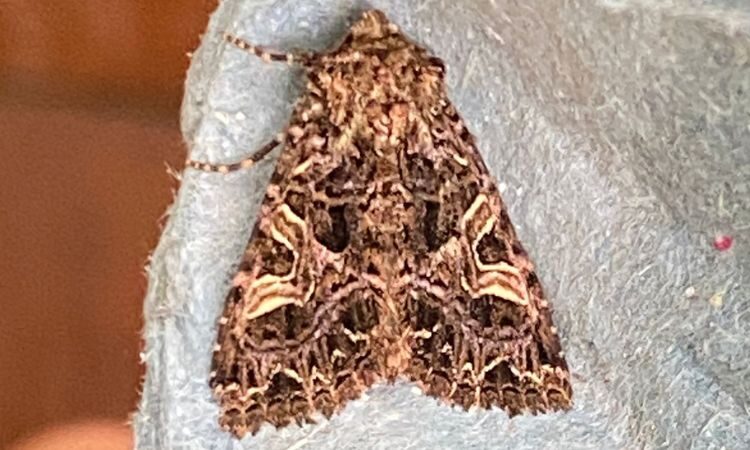
Campion Moth

