
Planting a path for pollinators
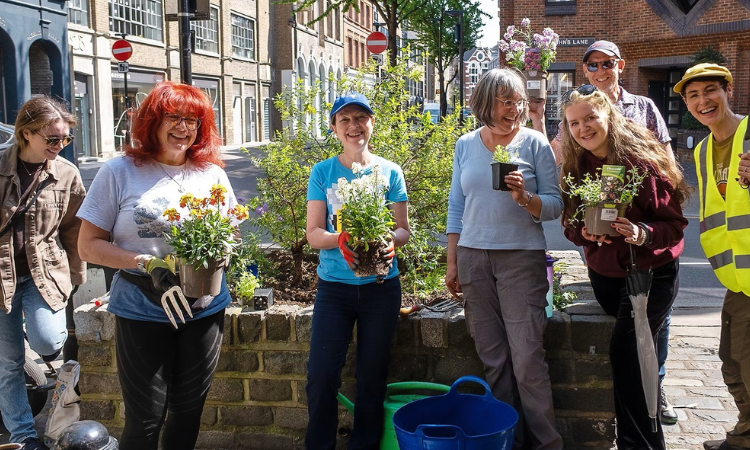
The Clerkenwell Pollinator Path has come on in leaps and bounds since it started last year. Funded by Islington Council, the project is an amazing example of local people using science to support nature, with a group of passionate volunteers working on various ingenious ways to bring pollinators and therefore plants back to hyper-urban Clerkenwell. We spoke to three key players among their growing community of pollinator enthusiasts.
Tiny seeds, big ideas
The first pollinator pitstop wasn’t part of a grand plan.
“It started because St John’s Churchyard was honestly one of the dingiest, most unloved spaces you could imagine.”
Jess had already spent years helping with community gardens around the neighbourhood.
“There was a garden by Barts Hospital, another at the Barbican, one in a nursery playground. Then I looked at St John’s and thought: surely we can do something here.”
The idea quickly grew.
Through conversations with Sarah Wood and research into pollinator behaviour, a simple but powerful concept emerged.
“Some insects can only fly short distances before needing to refuel. London has lots of green spaces, but they’re often disconnected. We have to create routes between them.”
The solution became neighbourhood pollinator pitstops.
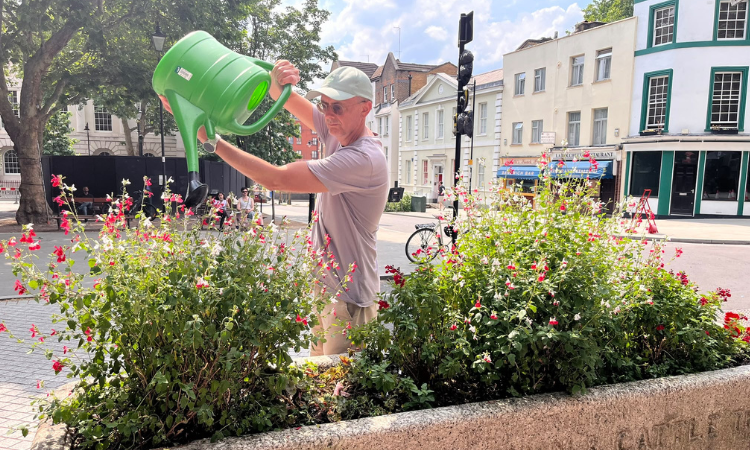
A volunteer tending their pitstop
Grow your own pollinator pitstop
Rather than buying plants, volunteers decided to grow them.
“We created our own nursery. We grew plants from seed and cuttings. Anyone can do that.”
Jess lights up when she talks about propagation, the process of growing new plants from seeds and cuttings.
“My dad was a gardener. I’ve always loved growing things. There’s something magical about taking a cutting, putting it in water and watching roots appear.”
She also enjoys the mischievous spirit of bringing life to forgotten places.
“I love the idea of guerrilla gardening. There are so many unloved places crying out for a few plants.”
Then there’s the joy of watching insects discover them.
“On a whimsical level, I like the idea that all these insects can go on their little journeys. You’re giving them a day out.”
One moment stands out brightly in her memory.
“When I saw the first butterflies and bees returning to St John’s Churchyard, it was incredibly exciting.”
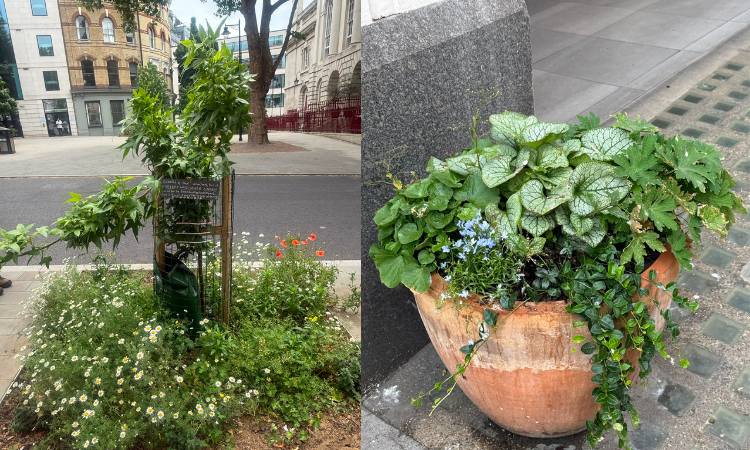
A selection of pollinator pitstops
Anyone can do this
The planting soon became about people as much as pollinators.
A Barts Hospital staff member agreed to water the first pitstop. Someone else donated cuttings. Others brought seeds from home. Now every pitstop has a local ‘parent’.
“The minimum responsibility is making sure it gets watered. But often people do much more than that.”
Some locations have become community projects in themselves.
Jess explains ,”one café owner waters a pitstop outside their business every day. Other people bring plants, seeds or compost. We just need more and more people getting involved. Anyone can do this. Every bit of green space either has someone who loves it or needs someone to love it”.
The newest chapter is at St Luke’s Community Centre, where volunteers are helping revive a growing space complete with chickens.
Looking ahead, Jess hopes the idea spreads far beyond the neighbourhood.
“I’d love to reach the point where streets are competing to be the greenest. Imagine every green space connected, every neglected corner planted, every resident feereling they can play a part.”
Read more about the Clerkenwell Pollinator Path.
Latest Discover Islington blog
- Planting a path for pollinators 5 November 2026
- Ronan: hunting for the secrets of solitary bees 28 October 2026
- The people pollinating Islington together 16 October 2026
- Residents craft community on Loraine Estate 16 October 2026
- Five tips to tackle hate crime 16 October 2026
- Meet Islington’s new storytellers 13 October 2026

