
Ronan: hunting for the secrets of solitary bees
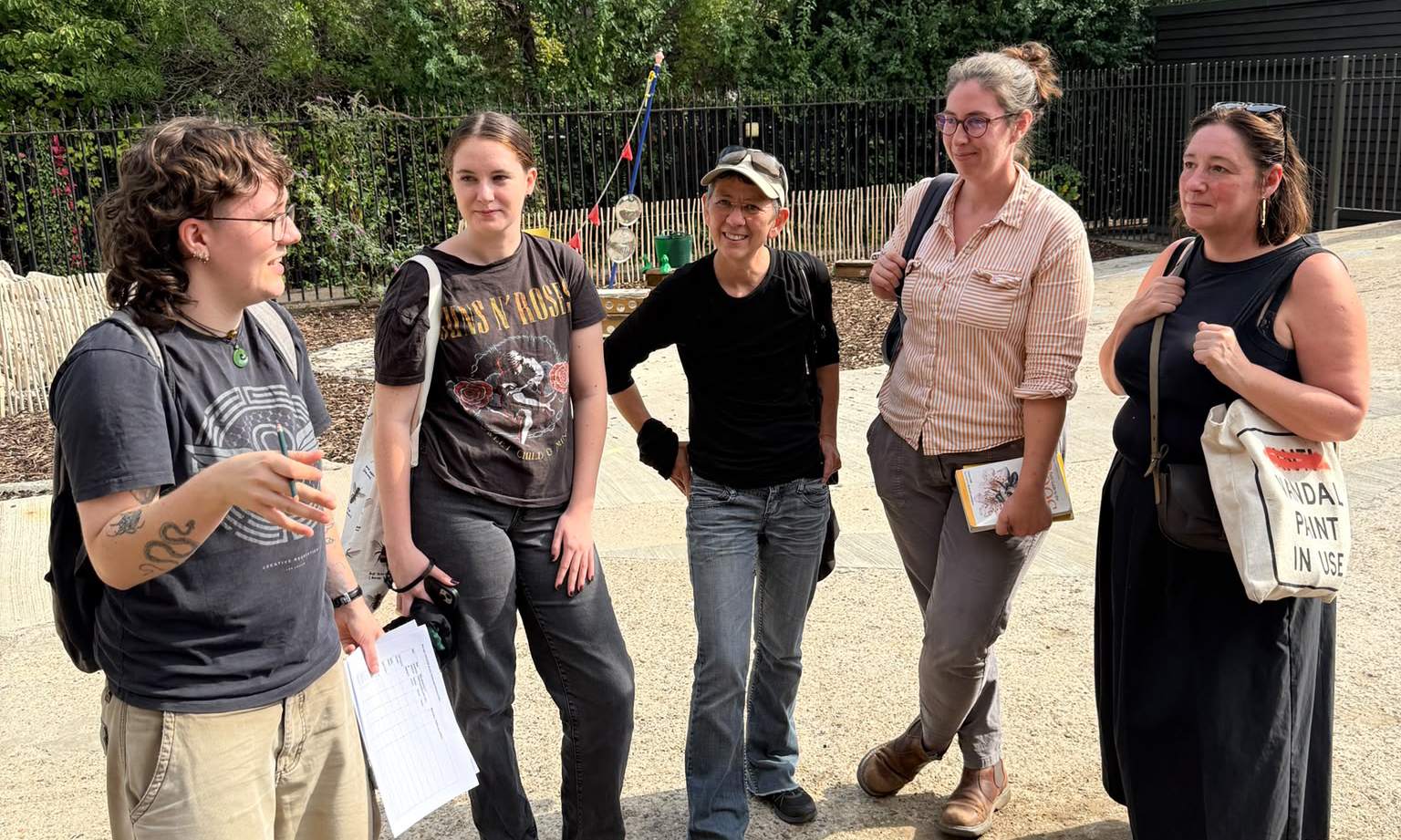
The Clerkenwell Pollinator Project has come on in leaps and bounds since it started last year. Funded by the council, the project is an amazing example of citizen science, with a group of passionate volunteers working on various ingenious ways to bring pollinators and therefore plants back to hyper-urban Clerkenwell. Pollinators bring life to our planet, and they point the way for us creating more lush, green, healthy neighbourhoods in the future.
To celebrate their recent victories at the Islington in Bloom Awards 2026, we spoke to three key players among their growing community of pollinator enthusiasts.
“I honestly can’t remember a time when I wasn’t interested in wildlife.”
For Ronan, fascination with insects started young and never faded.
“There’s this incredibly complex world happening right at your feet, but most people never notice it.”
Today, much of his attention is focused on solitary bees: the often-overlooked pollinators that make up the vast majority of Britain’s bee species.
“When people think of bees, they think of honeybees living in hives. But we have around 270 native bee species, and most of them are solitary. Many nest underground.”
That presents a problem in a city dominated by concrete and tarmac.
“Ground-nesting bees need bare earth. The habitats they rely on have become increasingly rare.”
His interest became a research focus through university projects studying solitary pollinators and their importance.
“One study found solitary bees carrying out around half the pollination in orchards. They’re hugely important, yet we still know relatively little about them.”
Working alongside Sarah and local volunteers, Ronan has helped create experimental bee banks and habitat features across the area.
“We’ve already seen encouraging signs. Since installing the bee banks, we’ve noticed increased activity around some of the bee hotels too. This spring we had bees nesting in several of them.”
But many questions remain unanswered.
“What attracts bees to one location and not another? How quickly do they discover new habitats? These are things we’re still trying to understand.”
He compares the work to detective work.
“We’re trying to crack the ground-nesting bee code. Sometimes it feels a bit like hunting for Sasquatch.”
What surprises him most is how much public curiosity the project generates.
“People become fascinated once they realise these insects are all around them. Many solitary bees can’t sting people at all, or if they can, it wouldn’t affect you.”
Beyond the science, the project has transformed his relationship with the area.
“It’s been incredibly rewarding. I’ve made lovely friends through it. When you’re working with people who care deeply about the same thing, it’s hugely bonding.”
He also enjoys introducing children to the hidden world of insects.
“You help a child safely catch and release a bee, and suddenly they’re seeing something they never noticed before.”
For Ronan, insect conservation offers a hopeful message.
“Conservation can feel overwhelming, but insects operate on a very local scale. You don’t need thousands of acres. You just need to ask: do my local pollinators have somewhere to feed, nest and drink? That’s something almost everyone can help with.”
Latest Discover Islington blog
- Ronan: hunting for the secrets of solitary bees 28 October 2026
- The people pollinating Islington together 16 October 2026
- Residents craft community on Loraine Estate 16 October 2026
- Five tips to tackle hate crime 16 October 2026
- Meet Islington’s new storytellers 13 October 2026
- Designing inclusive schools 6 October 2026

