
Black Islington
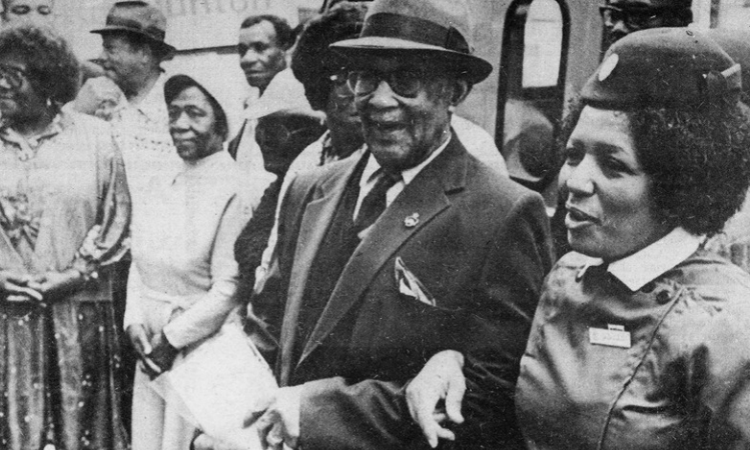
When people think of Black British history, they often think of Brixton, Notting Hill or Hackney. But Islington has its own rich and often overlooked story, one shaped by activists, artists, community leaders and organisations that have left a lasting mark on the borough and beyond
We spoke to Tony Warner, founder of Black History Walks, and he explained part of the reason Islington’s story is less well known is that post-war migration became closely associated with a handful of London neighbourhoods.
“Notting Hill and Brixton are seen as the centres of the post-Second World War migration story,” he says. “But Black people had been living in other parts of London for over 200 years. Those stories simply aren’t as well known.”
Building a community
The story of Black Islington cannot be told without the Windrush generation. Following the 1948 British Nationality Act, people from across the Caribbean came to Britain to help rebuild the country after the Second World War. Many settled in Islington, finding work in healthcare, transport and other essential services while building families and communities in the borough.
Like many Black communities across Britain, they often faced discrimination in housing and employment. In response, residents developed their own support networks and community-led solutions.
Warner points to informal community banking schemes known as Pardner in the Jamaican community, Sou Sou in the Bajan community and Box-Hand in the Guyanese community, where groups contributed money each week to help members save for a house deposit.
“Because mainstream banks wouldn’t lend to Black families, these community banking systems enabled people to buy homes,” he says. “Some of those houses are still owned by the same families today.”
As Black communities became more established in Islington, residents also began shaping the borough’s public life. One pioneering figure was Valda James, who arrived from Jamaica in 1961 as part of the Windrush generation. In 1986, she became the first Black woman elected to Islington Council and, two years later, Islington’s first Black Mayor, breaking new ground for Black representation in local government.
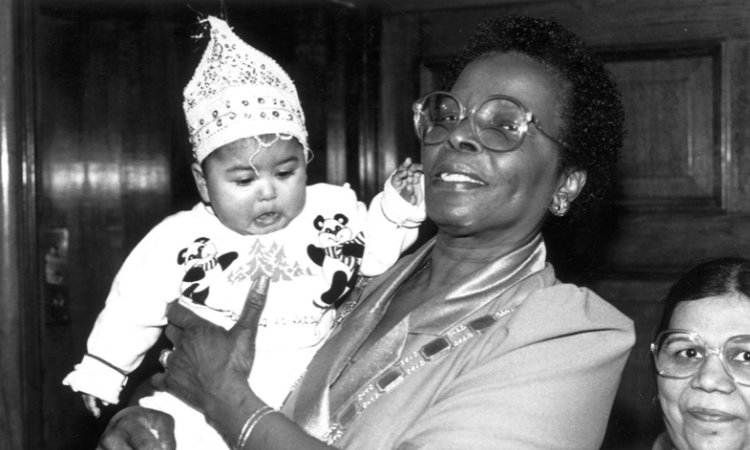
Valda James, Islington's first Black mayor
Islington and the fight for justice
While many people associate the struggle against apartheid with South Africa, fewer know that Islington played a small but significant role in the movement.
From the 1970s onwards, the African National Congress (ANC), the organisation led by Nelson Mandela in the fight against apartheid, operated from offices in the borough.
But Warner says the site was much more than a meeting place.
“The Anti-Apartheid Movement used to meet there, but it was also a recruitment centre,” he explains.
Volunteers from across London were recruited to support the ANC’s work in South Africa, gathering intelligence and assisting anti-apartheid operations.
“It’s an extraordinary story that very few people know.”
Another lesser-known chapter of Black Islington centres on Holloway Road and The Black House, founded by activist Michael X. Supported by high-profile figures including Muhammad Ali, John Lennon and Yoko Ono, it became a space where people could attend poetry events, watch films, learn about Black history and meet others in the community.
The Keskidee Centre: culture, creativity and community
If one place captures the cultural legacy of Black Islington, it is the Keskidee Centre.
Founded by Guyanese architect and activist Oscar Abrams, the centre opened on Gifford Street in the 1970s and became Britain’s first dedicated Black arts and community centre.
“One problem Black communities often faced was simply not having spaces of their own,” says Warner. “Oscar created one.”
The centre hosted some of the most influential Black artists and thinkers of the era, including Maya Angelou, Linton Kwesi Johnson and Wole Soyinka. It also offered theatre, music, education and community programmes, helping young people learn about both their history and their creative potential.
Over time, the Keskidee Centre became one of Britain’s most important Black cultural institutions, leaving a legacy that can still be felt today.
Why these stories matter
For Warner, the key message of Black History Month is simple: Black history is everywhere.
“People often don’t realise just how much Black history surrounds them,” he says. “Wherever you are in London, there are stories waiting to be discovered.”
From Windrush families building new lives in Islington, to anti-apartheid activists, community organisers and pioneering artists, Black history is woven into the fabric of the borough.
These stories remind us that Black history is not a separate history. It’s part of Islington’s story and it continues to shape the borough today.
Walk the history for yourself
Black History Walks offers guided tours, talks and events that bring London’s often-overlooked Black history to life.

