
Space hacks: making small homes work better
Living in a small or overcrowded home can feel overwhelming. When rooms have to serve lots of purposes like sleeping, working, eating and relaxing, often all in the same space, it can be hard to switch off, stay organised or feel settled. Over time, a lack of space can affect our wellbeing and how we get on with the people we live with.
The good news is that even small, low-cost changes can make everyday life feel easier.
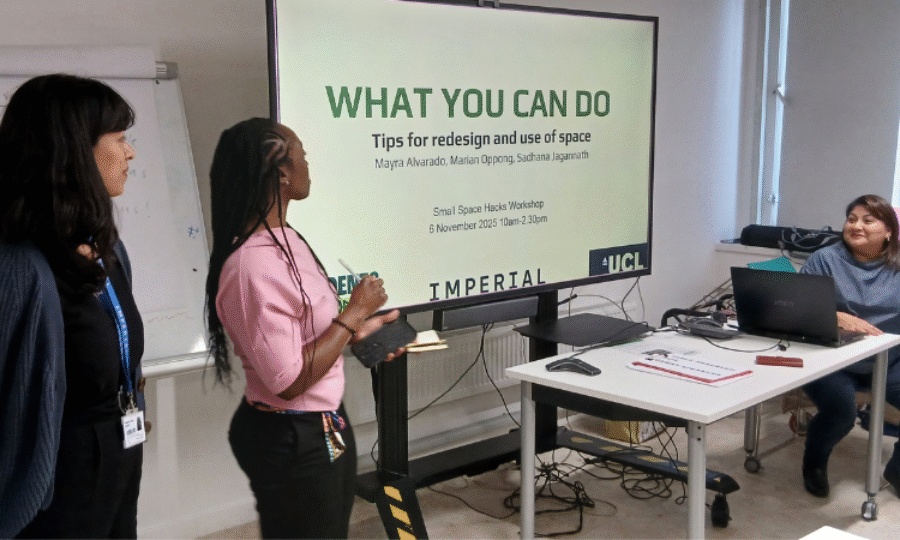
In November 2025, Islington residents came together for a co-production workshop led by Residents Without Borders in collaboration with Evidence Islington Health Determinants Research Collaboration (HDRC) and University College London. Residents shared what it’s really like living in crowded homes and explored practical ways to adapt their spaces. The emphasis wasn’t on perfect homes or expensive solutions, but on ideas that work in real life. The ideas came from a research project supported by Evidence Islington HDRC and University College London.
Below are some of the key ideas that came out of the session, shaped by residents’ experiences.
Make space by reducing clutter
When space is limited, clutter can build up quickly and it doesn’t just affect how a room looks, but how it feels. A home that’s always messy or crowded with stuff can feel noisy and stressful, even when it’s quiet.
Decluttering doesn’t need to be a big, scary task. Try setting aside just 10–15 minutes a day and focus on one small area, like a drawer or a shelf. Little and often really does work.
Some people find simple rules helpful, such as “one in, one out” or choosing one item a day to donate, recycle or bin. Over a month, that’s 30 things gone. Over a year, it’s hundreds.
It’s also worth checking for duplicates. Big families may genuinely need more of some things, but we often end up with extras we don’t use. Clearing these creates space without spending any money.
Use vertical space wherever you can
When you can’t make your home bigger, think about using your walls. Vertical storage can free up floors and make rooms feel easier to move around in.
Hooks, over‑door organisers and simple shelves can hold everyday items like coats, bags, school uniforms or kitchen tools. One resident shared how stick‑on hooks in a child’s bedroom made it possible to hang school clothes where they were easy to reach — all for a few pounds and with no DIY skills needed.
If you can, leave some space on shelves rather than filling them edge to edge. Having a bit of “empty space” helps rooms feel calmer and less cluttered, even if you still store the same amount overall.
Choose furniture that earns its place
In small homes, furniture needs to work hard. Pieces that do more than one job can make a big difference. Examples include beds with drawers underneath, ottomans with storage inside, or fold‑away tables.
Furniture raised on legs can also help. Being able to see the floor underneath gives a sense of openness and flow, which makes rooms feel bigger and lighter.
None of this needs to be high‑end or new. Many households already own furniture that can be rearranged or reused in smarter ways.
Think about light, air and your senses
Small spaces can feel more manageable when they’re broken into clear zones. Lighting can help with this. Instead of relying on one bright overhead light, try using lamps or softer lights to separate areas for working, eating or relaxing — even in the same room.
Fresh air is important too. Opening windows fully for five to 15 minutes a few times a day can help clear cooking smells and moisture without cooling the home too much. It’s often more effective than leaving windows slightly open all day.
Smell also affects how we feel in a space. Simple, low‑cost ideas like ventilating regularly, using houseplants, or placing used coffee grounds in a bowl to absorb odours can make shared spaces feel fresher and more welcoming.
Small changes can make a real difference
Living in an overcrowded home is not a personal failing, and it’s not something residents should have to solve alone. Many people at the workshop spoke about how hard it can feel especially when privacy is limited or money is tight.
But the session also showed that small, affordable changes can help people feel a bit more in control of their space and their day‑to‑day lives. It’s not about creating a perfect home, it’s about making homes work better for the people who live in them.
If you’re struggling with overcrowding, help and advice is available.
Need more support with overcrowding?
If your home is overcrowded, Islington Council’s Housing Options team can offer advice on rehousing options, mutual exchanges, bidding for homes, and support while you wait for alternative accommodation – including help with space‑saving furniture for eligible households.
Find out what support is available and how to apply at:
islington.gov.uk/housing/finding-a-home
If you’re already a council or housing association tenant and want to explore swapping homes with another tenant, mutual exchange schemes can sometimes offer a quicker route to more suitable housing:
homeswapper.co.uk (free for Islington tenants).
Get involved with Evidence Islington HDRC
Evidence Islington is a Health Determinants Research Collaboration (HDRC) that supports Islington to make better use of evidence and research, working in partnership with the local council and universities and are funded by National Institute for Health Research (NIHR).
Find out more about Evidence Islington HDRC or to get involved, email EI@Islington.gov.uk.

