
Five tips to tackle hate crime
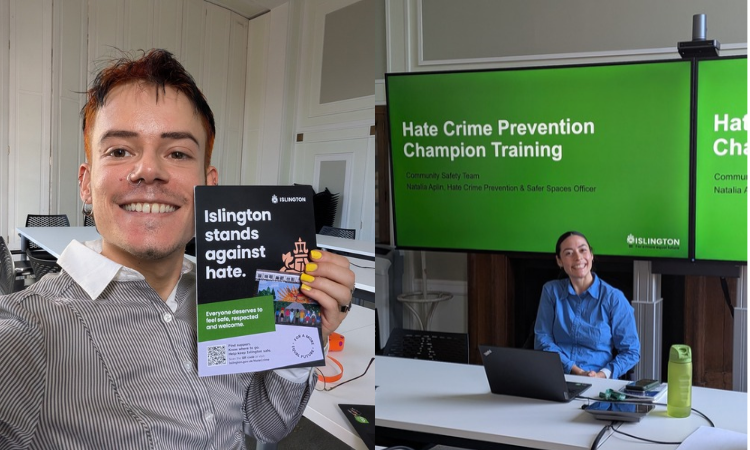
It’s Hate Crime Awareness Week, a chance to raise awareness of hate crime, support victims and work together to make Islington a place where everyone can thrive. Miles Rhys Edwards (they/he), Co-chair of Islington Council’s LGBTQ+ Staff Forum, recently trained as a Hate Crime Prevention Champion. Here are five things they learned.
- Hate crimes and hate incidents are two classifications given to different orders of offensive behaviour. There are certain forms of abuse that don’t meet the threshold for a crime, but you can still report them as a hate incident, which helps services like the police and community safety build a picture of community tensions and effectively address them.
- Anyone can be a victim of hate crime, regardless of your background. If someone verbally abuses you because they think you are, for instance, gay, even though you are straight, then that is still a hate crime and should be recorded as such.
- “Mate Crime” is a specific category of exploitative crime where someone’s identity and vulnerabilities are used to take advantage of them, for instance someone with a learning disability being exploited by people financially. Warning signs of this might be someone appearing unusually dishevelled or unclean, having new financial problems, or seeing their loved ones considerably less. “Cuckooing” is a similar crime often inflicted on the elderly by younger people, but age is not one of the five monitored categories that qualify hate crimes.
- You can report hate crimes and incidents to Crimestoppers UK anonymously and the information will be passed on to the police and recorded, in case you don’t feel comfortable speaking to the police. CATCH (Communities against hate) are your one-stop shop for specialist victim support in London.
- One lesson I will definitely take away for when I next witness hate crime is that a very effective way to protect the victim is to distract the perpetrator – one of the 5 D’s of active bystander training. You can drop (not one of the 5 d’s but a useful way to remember!) something on the ground nearby and pretend to be really worried about what you’ve dropped and needing help – this can leave the victim enough time to get away. I thought this was a more appealing intervention than speaking to the victim, who may worry you’re also assailing them, or the attacker, who could be volatile. Such a good tip!
Safety is everyone’s business and anyone can become a Hate Crime Prevention Champion! If you’re interesting in tackling discrimination, promoting inclusion and empowering others in your community email hatecrime@islington.gov.uk to get involved.

