
LGBT+ Tour of Charterhouse
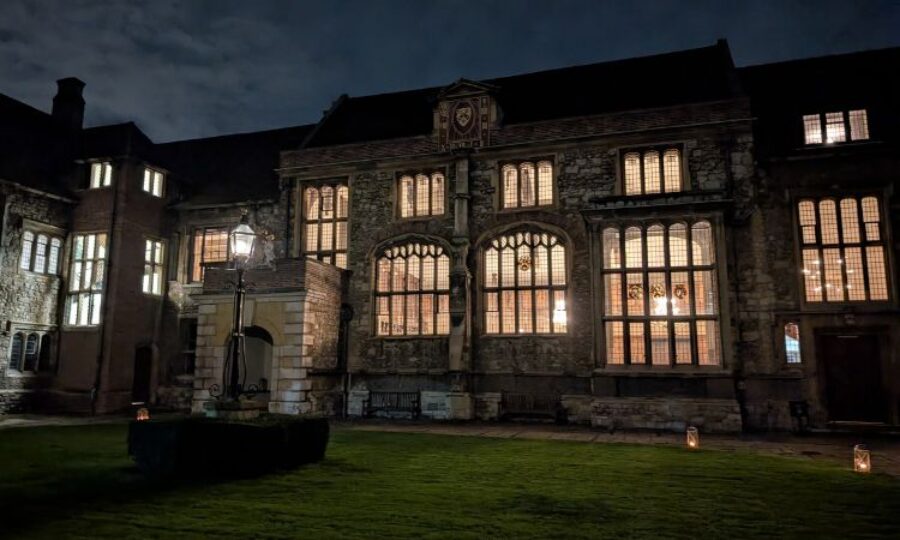
On a nippy late-winter night, I attended the LGBT+ Tour of Charterhouse, the oldest structure in Islington. Now in its third year, this candlelit, resident-led tour offers a richly informative and moving exploration of queer history within the ornate former almshouse in Clerkenwell. Founded in 1371, Charterhouse emerges as a longstanding refuge where LGBT+ lives and stories have quietly flourished.
We ascended a grand wooden staircase and entered the vast Great Hall, romantically lit by flickering electric candles. Towering portraits of kings and courtiers looked on as we gathered, drinks in hand, to meet our first guide, Mansel, one of the Charterhouse brothers. His rich, resonant voice – honed from years at the Bristol Old Vic — carried effortlessly across the space as he introduced us to Charterhouse.
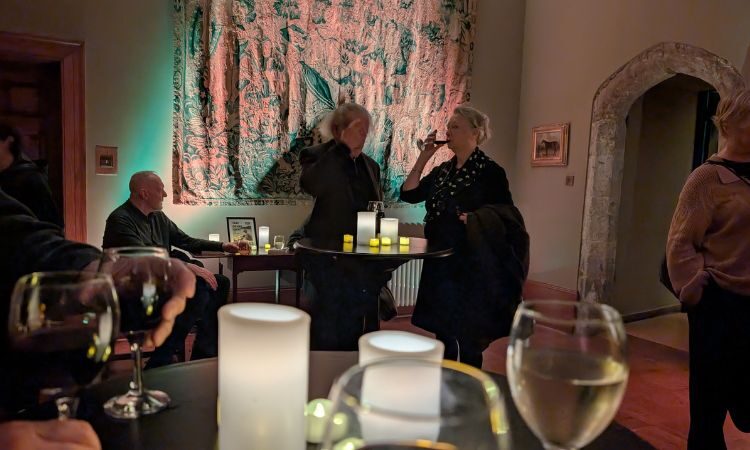
Candlelit drinks
Charterhouse began as a Carthusian monastery before being seized during Henry VIII’s dissolution of the monasteries in 1534. Over the following century it changed hands between powerful men, before finding its enduring purpose in 1610, when the wealthy civil servant Thomas Sutton established it, via an Act of Parliament, as a ‘hospital’ for ‘unmarried men over 50 (or 40 if maimed)’, alongside poor scholars and officials. Mansel explained how these conditions fostered what he called a “gay aspect to life at Charterhouse”, one that has persisted for over 400 years.
As he spoke, Mansel gestured to portraits of significant figures connected to Charterhouse. One, George Villiers II Duke of Buckingham, was the son of King James I’s favourite, George Villiers, I Duke of Buckingham, whose romantic relationship was recently dramatized in the television series Mary & George – partially shot in Charterhouse. The site’s queer legacy continued into the 20th century with architects John Seely and Paul Paget, partners in life as well as work, who restored Charterhouse after WWII bomb damage. Their relationship was lived relatively openly at a time when homosexuality remained criminalised.
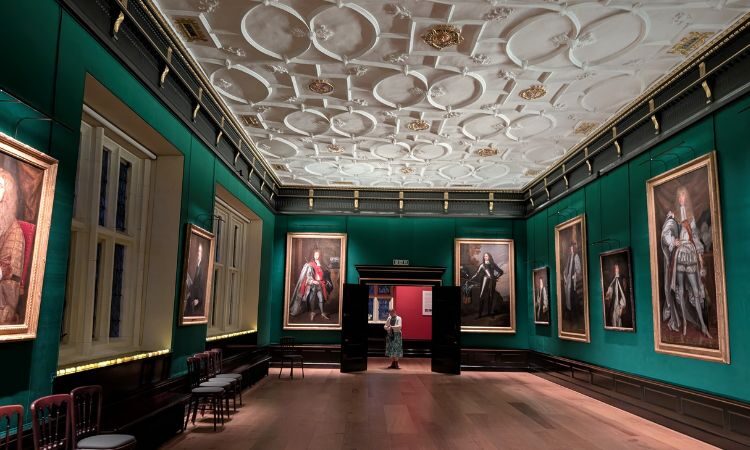
The Great Hall
Charterhouse has remained a place of sanctuary. Actor Richard Franklin, who starred in Doctor Who, came to terms with his sexuality while living there. The priest Stanley Underhill, who endured conversion therapy earlier in life, finally came out at the age of 91 while a brother at Charterhouse. Mansel quoted Underhill’s memoir, in which he wrote that there, “I luxuriated in my newfound freedom to be me”.
The institution continues to evolve. Since 2017, women have been admitted and now make up a third of the brothers; a deliberately unchanged and satisfyingly irreverent title. The outgoing Preacher lived on site with her female partner, reflecting Charterhouse’s quietly radical inclusivity.
The second half of the tour, led by guide Raymond, explored the atmospheric grounds, including the medieval Norfolk cloister, courtyards, gardens, and filming locations for recent Oscar-winner Hamnet. The gardens were once maintained by a gay man, one half of the first gay couple to wed at Charterhouse after it secured its marriage licence.
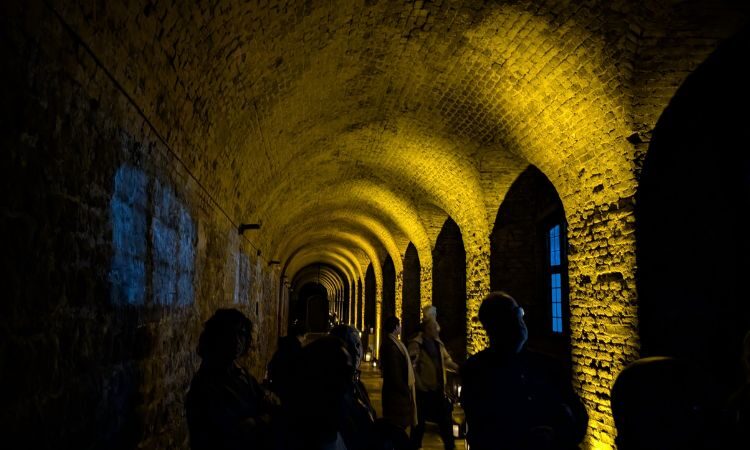
The Norfolk Cloister
This tour reveals queer history, culture and community in the most unexpected places, including a hidden garden in the heart of London. With resident-led tours available year-round and £1 tickets for Islington residents, I wholeheartedly recommend it.
Read more: Explore the Charterhouse – The Charterhouse

